
Measuring Blue Carbon Sequestration on Protected Wetlands
26 Nov 2026
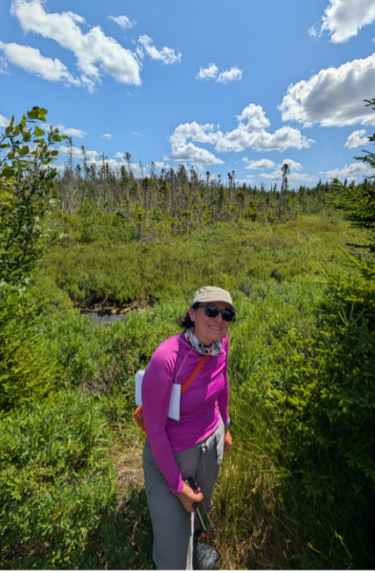
Cecilia Cordero-Oviedo (PhD), Founder, Chair and Executive Director of Blue Maritime Society, on Nature Trust Conservation Lands.
Blue Maritimes is a Nova Scotia-based non-profit whose mission is to advance rigorous scientific research and applied environmental knowledge that supports the conservation, restoration, and climate resilience of coastal and wetland ecosystems in Nova Scotia and across Atlantic Canada. They recently conducted research on Nature Trust-protected wetlands on the Eastern Shore.
We’re honoured to share an interview with Cecilia Cordero-Oviedo (PhD), Founder, Chair and Executive Director of Blue Maritimes, in which she offers her perspective on the significance of this work and its relevance to the Nature Trust.
Cecilia is an earth scientist with an interest in the interactions between science and nature base solutions to find answers to global issues with local impacts, such as climate change. She believes in finding the best approach collaboratively, with open dialogue and honest conversations.
What is the Blue Maritime Society?
Blue Maritimes is a non-profit organization based in Halifax, NS. Our core strength is coastal and wetland science, including blue carbon, but our work supports a broader goal: helping partners make better decisions about environmental mitigation, restoration, compensation, monitoring, and climate resilience across Nova Scotia and Atlantic Canada.
Our Mission: To advance rigorous scientific research and applied environmental knowledge that supports the conservation, restoration, and climate resilience of coastal and wetland ecosystems in Nova Scotia and across Atlantic Canada.
We are currently working on a project funded by Halifax Climate Investment, Innovation and Impact (HCi3) Fund, in three wetlands within the Halifax Regional Municipality. We are taking soil cores to calculate the carbon store in the coastal wetlands with the aim of completing a data gap on information about carbon quantification in the Maritime provinces.
What is “blue carbon”?
Blue carbon refers to the organic carbon stored in the oceans and coastal ecosystems such as the coastal wetlands.
How is the Blue Maritime Society working with the Nova Scotia Nature Trust?
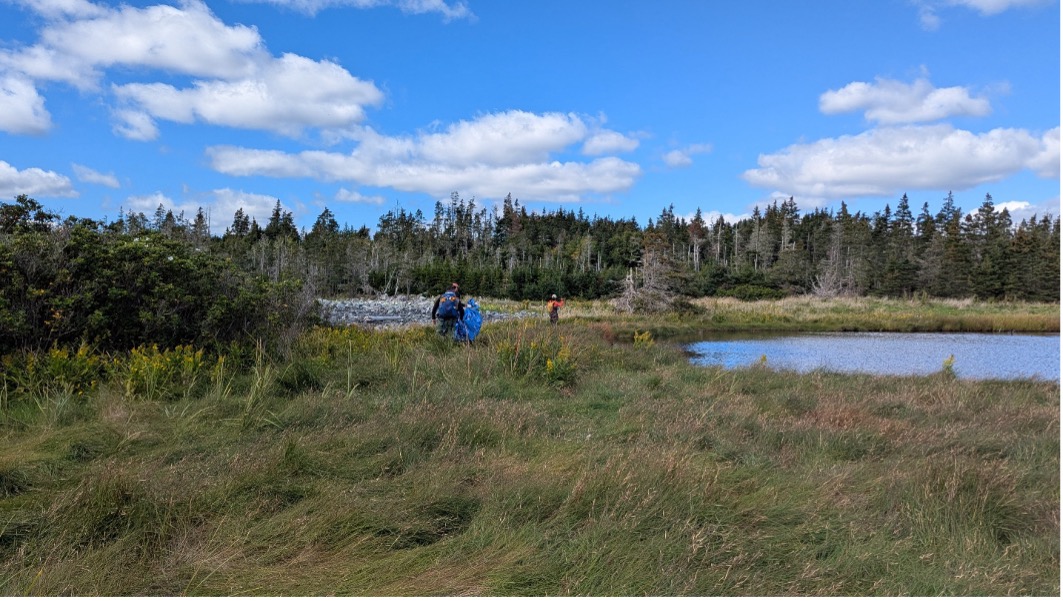
Blue Maritime Society conducting fieldwork on Nature Trust Conservation Lands.
Our current HCi3 project is taking place on conservation lands owned by the Nova Scotia Nature Trust. We had the opportunity to visit Lawlor’s Point Conservation Lands two times this year; the first one was our initial site exploration and the second time for sampling.
During the spring, we explored the property on foot and took a drone tour to see the wetland’s extent and accessibility. Based on this initial assessment, we decided that using a boat would be the most efficient way to reach the wetland sampling locations.
During the summer, we travelled by boat from Murphy’s Cove with all the necessary equipment to collect the soil cores. A team of three volunteers and I carried out the fieldwork. Our first step was to identify visible differences in vegetation across the wetland, which helped us select representative sampling locations. At each location, we described the vegetation type and used a metal soil probe to estimate soil depth and take the best soil profile.
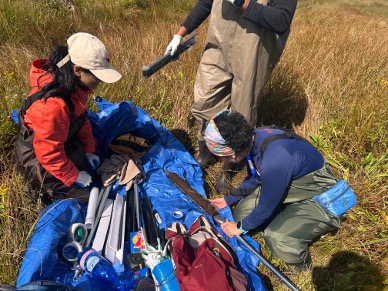
Collecting soil cores in a coastal salt marsh.
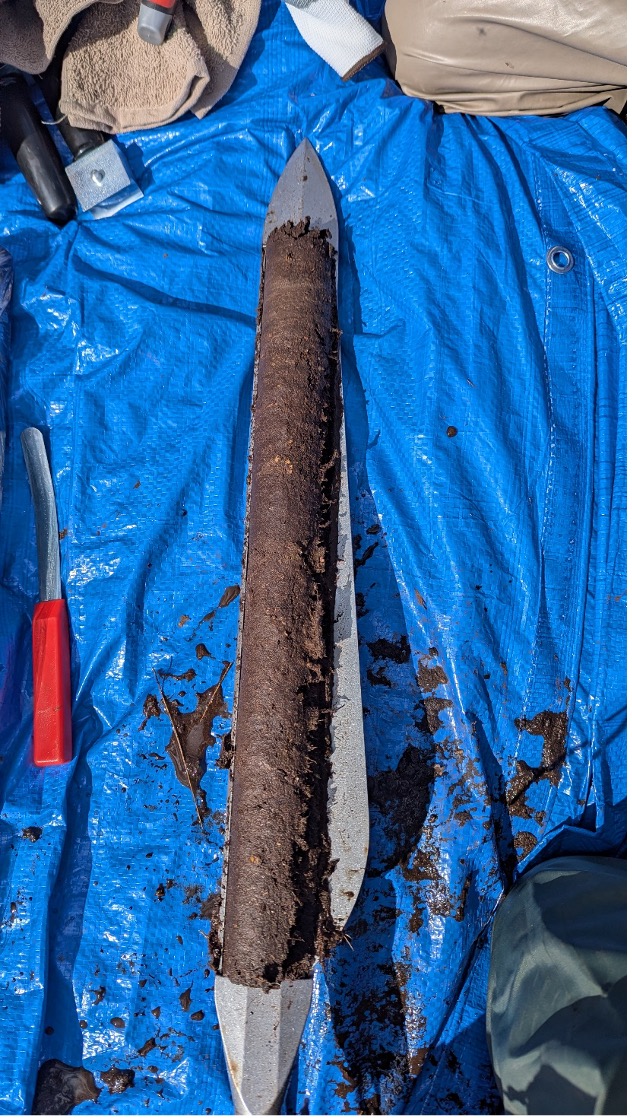
Once we identified a suitable sampling location, we prepared our work area by laying out a tarp to keep the equipment organized and provide a clean surface for handling, packing, and labelling the cores. We used a Russian peat corer to retrieve the soil profiles and PVC tubes to store and transport the samples. The cores were also protected with aluminum foil and plastic wrap to preserve them during transportation.
We repeated this process in different points within the wetland, taking into consideration differences in vegetation types, geomorphology, and the overall extent of the wetland. Our goal was to capture as much of the natural variability within the wetland as possible and establish a baseline to understand soil characteristics and carbon storage potential.
How does a wetland actually store carbon? What soil characteristics are you looking for that indicate greater potential for carbon storage?
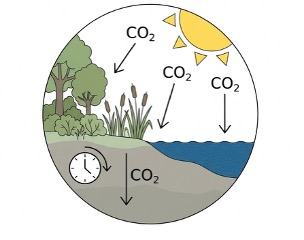
Illustration of carbon storage over time.
The carbon coming from the atmosphere accumulate in trees, shrubs, grasses and in the soils. In this case, the carbon that landed in the wetland soils goes deeper with time and because they have the perfect conditions to keep the accumulation with time, it allows us to calculate the carbon stored for long periods of time.
Typically, what we look for are soils with high organic matter content, silty and clayish texture, waterlogged and undisturbed as possible for this specific baseline sampling.
What have you learned so far from this work, and what are you hoping to learn?
 So far, one of the main things we have learned is that every wetland is extremely different. Even when previous information about a site is available, things can look quite different when you start conducting a more detailed assessment on the ground. This is not surprising, considering how heterogeneous these ecosystems are and how challenging their classification can be.
An important lesson from this work is that this diversity also makes wetlands incredibly valuable, but at the same time, vulnerable and often underestimated ecosystems. I don’t think people fully realize the benefits these places provide or how much environmental information and carbon is stored in their soils.
Even during a walk through a relatively small wetland on one of the conservation properties, we were able to observe several microhabitats where different plants, insects, and birds live. We even noticed that deer seemed to have a certain preference area of the wetland. These observations reminded us that wetlands are more than just areas of saturated soil; they are complex ecosystems supporting an extraordinary diversity of species.
After this baseline sampling is completed, what are your next steps?
Once the baseline sampling is completed, we want to build on this work by looking at more practical approaches to continue supporting the conservation of these ecosystems. We know that this is a long-term effort that may take several years to develop. While we build the baseline we also want to explore how technologies can make wetland monitoring more accessible, efficient, and effective.
Beyond these initial objectives, we hope to help communities better understand the environmental value of their wetlands and the opportunities associated with protecting them. We believe that local communities should have the knowledge, resources, and decision-making power to determine what activities take place on their lands and how the environmental and potential economic benefits generated by these ecosystems are managed and shared.
How can this inform conservation, restoration, and climate resilience for the Nature Trust and other organizations?
I believe that knowledge itself brings a lot of power. By understanding how much carbon is stored in these ecosystems, organizations such as the Nature Trust can strengthen their arguments for why specific areas should be protected or restored. This information adds another important dimension to the value of wetlands, beyond the many species that depend on them.
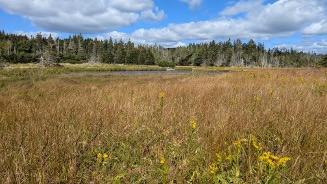
Wetland vegetation view from one from the coring sites on a Nature Trust Conservation Lands.
Wetlands also play an important role in addressing the impacts of human activities. They store carbon over long periods of time, helping to keep it out of the atmosphere, while human activities, particularly industrial activities and the burning of fossil fuels, continue to release large amounts of CO2 and accelerate climate change. In this sense, protecting and restoring wetlands is not only about conserving biodiversity; it is also about recognizing and supporting the natural systems that help mitigate the impacts of our activities.
I hope that having this information available will help the Nature Trust and other organizations make stronger conservation and restoration decisions, communicate the climate value of these ecosystems, and encourage greater recognition of the role wetlands play in climate resilience.
What is one thing you would want more people to know about coastal ecosystems or nature-based solutions?
Coastal ecosystems are incredibly dynamic and important, not only for the many species that depend on them but also for us as human beings. We enjoy going to the beach, walking along the coast, or simply spending time near the ocean, but we don’t always realize how much these environments change throughout the seasons and over the years, or how those changes can eventually affect our own lives.
I think that becoming more aware of how and why coastal ecosystems change, and how we can help reduce the impacts of climate change, can make a big difference in how we relate to and care for these places. The more we understand them, the more likely we are to recognize their value, support nature-based solutions, and bring these considerations into broader planning and decision-making processes.
Thank you to Blue Maritimes for their contributions to conservation science, and for their partnership with the Nature Trust in understanding this aspect of protected nature.