
Conservation Science Corner: What is an endangered species (part 2)?
26 Nov 2026
By Dominic Henry, Senior Conservation Scientist
In the first installment on our series on conservation status ranking, we looked at classifications systems used at the international and national level, and introduced the term “Species at Risk” (SAR). To recap: Canada’s Species at Risk Act (SARA) provides a legal framework for protecting species classified as Endangered, Threatened, or Special Concern based on their threat of extinction. Collectively, species that fall within these three groups are referred to as SAR at a national level.
Although assessments and classifications at the national level are essential, there is also a need to consider how species are faring at smaller spatial scales and within local jurisdictions.
At this point you might be asking: why do we need to complicate things with more ranking systems? There are several reasons for this and much of this is to do with spatial scale.
Canada covers an enormous landmass and intuitively we do not expect species to be distributed evenly across the country. SAR assessments are conducted based on the combined national population, but there are often distinct regional populations of a particular species. Some of these regional or provincial populations are thriving, while in other provinces or territories that same species is experiencing more severe declines. The intensity of threats to a particular species can also differ between populations, so there is a need to acknowledge this difference in order to more specifically address conservation of a species within provincial policy frameworks.
Another factor to consider is that SARA legislation imposes restrictions on federal land, but the same restrictions are not necessary applied to private or provincially owned land. Understanding population trends on a provincial level allows provincial conservation authorities and stakeholders to understand the factors that are driving population change (whether it be increases or decreases), create recovery plans to try and reverse declines, and provide motivation for where the data gaps are and what survey effort is required to fill those gaps.
Nova Scotia’s Endangered Species Act (ESA) and the Atlantic Canada Conservation Data Centre (AC CDC) are two key mechanisms used to address these localised factors here within Nova Scotia.
Nova Scotia’s Endangered Species Act (ESA)
Instituted in 1998, Nova Scotia’s ESA was one of the first provincial endangered species acts in Canada. Following similar processes as those in the SARA, species are assessed by the Nova Scotia Species at Risk Working Group (analogous to COSEWIC, the body responsible for assessing species at a national level). This group then assigns the species a status of:
- Endangered (facing imminent extirpation or extinction),
- Threatened (likely to become endangered if limiting factors are not reversed), or
- Vulnerable (of special concern because of characteristics that make it particularly sensitive to human activities or natural events).
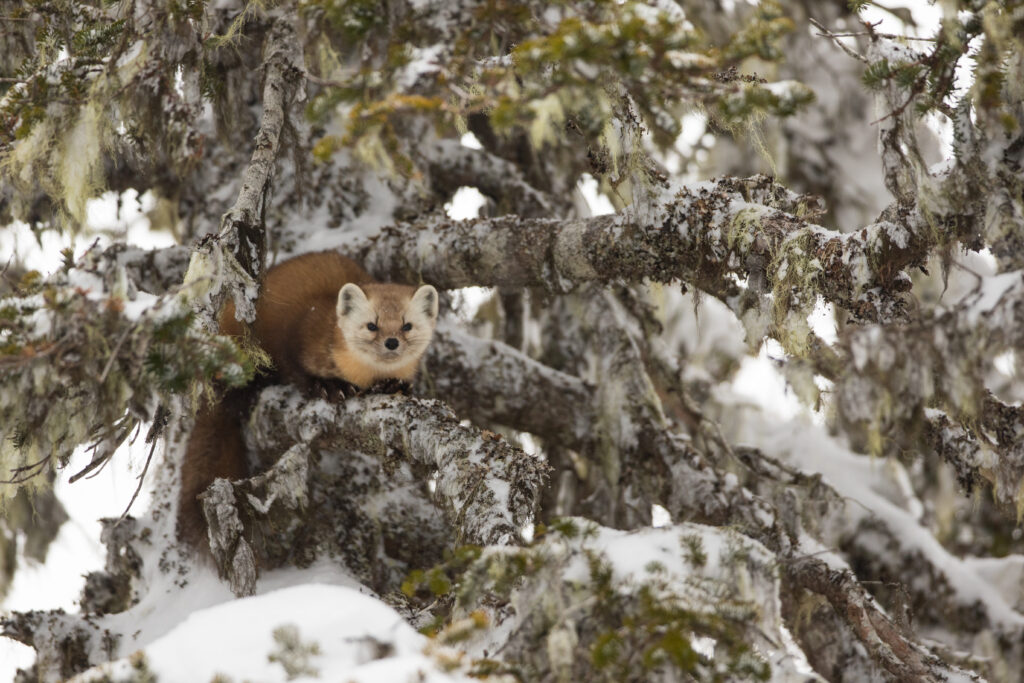
While very similar to SARA, this provincial process allows for local nuance in quantifying threats and population trends. There is a high degree of overlap between the list of SARA species in Nova Scotia and the list of ESA species, but they are not identical lists. There are 53 SARA-listed species and 63 ESA-listed species in Nova Scotia. The 10 species not included in SARA are: Peregrine Falcon (Vulnerable), American Marten (Endangered), Canada Lynx (Endangered), Mainland Moose (Endangered), Black Ash (Threatened), Eastern White Cedar (Vulnerable), Ram’s-Head Lady Slipper (Endangered), Rockrose (Endangered), Spotted Pondweed (Vulnerable), and Hoary Willow (Endangered).
This reflects the purpose behind having a provincial process: these species face greater conservation threats at a provincial scale than they do nationally.



The Atlantic Canada Conservation Data Centre (AC CDC)
 At this stage it’s important to talk about some of the data that is used by provincial authorities to conduct species assessments, and this is where the AC CDC comes in. The AC CDC compiles and provides data related to biological diversity in Atlantic Canada (New Brunswick, Nova Scotia, Prince Edward Island and Newfoundland and Labrador). Zoologists and botanists and the AC CDC conduct vast amounts of fieldwork to collect new species records and thus further our knowledge of the distribution and status of species and ecological communities of conservation concern.
Apart from collecting data in the field, the AC CDC maintains a database which currently holds over 3 million records of geo-located species observations. These data are used by a wide array of stakeholders to support conservation-related decision making, research and education. The AC CDC is not alone in this work, as there are Conservation Data Centres in almost all of Canada’s provinces and territories that follow the same standards and practices.
S-Ranks
There is one last ranking system (we promise!) worth mentioning: sub-national ranks, or S-ranks.
These ranks are used by the Conservation Data Centres in each province to give species a rank of S1 to S5 (see table of definitions below) for that particular province. This is the equivalent of COSEWIC at a national scale, in that it does not imply any legal protections but rather serves as a tool for decision-making. The AC CDC maintains S-ranks for all terrestrial vertebrates, vascular plants, bryophytes (mosses and related plants), and macrolichens as well as many invertebrate groups – a total of over 21,900 species in Atlantic Canada.
Table of S-Ranks
| S-Rank | Status | Description |
|---|---|---|
| S1 | Critically Imperiled | Critically imperiled in the province because of extreme rarity (often 5 or fewer occurrences) or because of some factor(s) such as very steep declines making it especially vulnerable to extirpation from the province. |
| S2 | Imperiled | Imperiled in the province because of rarity due to very restricted range, very few populations (often 20 or fewer), steep declines, or other factors making it very vulnerable to extirpation from the province. |
| S3 | Vulnerable | Vulnerable in the province due to a restricted range, relatively few populations (often 80 or fewer), recent and widespread declines, or other factors making it vulnerable to extirpation. |
| S4 | Apparently Secure | Uncommon but not rare; some cause for long-term concern due to declines or other factors. |
| S5 | Secure | Common, widespread, and abundant in the province. |
The Nature Trust uses the AC CDC species database on a daily basis, and it forms a key part of our land securement decision-making process. Knowing where rare species are (S-ranks S1, S2, and S3) is critical to evaluating the importance of a particular property and provides objective and transparent evidence during the securement process. We’re also proud to contribute records to the database when species observations are collected during our site assessments. baseline surveys, and monitoring visits.
The last bit of terminology we use at the Nature Trust is “Species of Conservation Concern” (SCC). This term is used as a catch-all when describing one or more species and implies that that group of species can contain species who may be SARA-listed, COSEWIC-listed, ESA-listed OR have a S-rank from S1 to S3.
If you’re ever lost, then you’re welcome to refer to this handy table, which provides a quick reference guide to the various conservation ranking frameworks.
Quick-Reference Guide to Ranking Framworks
| Framework | Abbreviation | Legislative Tool? | Scope | Extinction Risk Categories |
|---|---|---|---|---|
| International Union for Conservation of Nature’s Red List of Threatened Species | IUCN Red List | No | Global | Critically Endangered, Endangered, Near Threatened |
| Committee on the Status of Endangered Wildlife in Canada | COSEWIC | No | National | Endangered, Threatened, Special Concern |
| Species at Risk Act | SARA | Yes | National | Endangered, Threatened, Special Concern |
| Endangered Species Act | ESA | Yes | Provincial | Endangered, Threatened, Vulnerable |
| Sub-national Ranks | S-ranks | No | Provincial | S1 (Critically Imperiled), S2 (Imperiled), S3 (Vulnerable) |
It’s a lot of very specific terminology! Why is it so important to explain? As we continue to protect species and habitats across Nova Scotia, we strive to accurately report and communicate on this conservation progress. The next time you read an announcement of a newly protected land or a recap of stewardship projects keeping habitats healthy for the biodiversity they hold, we hope you’ll have a deeper understanding of what we mean when we describe a species as being a Species at Risk, Endangered, or Rare.

Thanks to Dominic, our Senior Conservation Scientist!
Are there conservation science questions you’ve always wanted to ask? Let us know and we might just include them in a future instalment of Conservation Science Corner!